Basingstoke Landscaping | Landscape Gardeners in Basingstoke — Driveways, Patios, Fencing & Turf
Landscape gardeners for patios, lawns, fencing & full garden makeovers. Free surveys, fixed written quotes, tidy workmanship.
Basingstoke Landscaping are landscape gardeners working across Basingstoke and out into the Hampshire villages — Oakley, Hartley Wintney, Alton, Kingsclere, Tadley, Odiham, Hook and Old Basing. Driveways, patios, fencing, garden walls, decking, turf, planting and complete garden makeovers, built by one team from dig to sweep-up.
Two facts about the ground here shape most of what we build. North Hampshire sits on chalk with a capping of clay-with-flints, so a garden can be free-draining at one end and sticky, flinty and hard going at the other. And a great deal of Basingstoke housing went up quickly during the town's expansion, which means shallow topsoil over compacted subsoil and builder's rubble sitting a spade's depth down.
That is why we dig trial holes before quoting anything structural. Excavation depth, sub-base thickness and drainage are the difference between a driveway that is still flat in fifteen years and one that ruts in three, and they are decided by what is under the lawn rather than by what goes on top of it.
Landscaping services in Basingstoke
From Victorian terraces around the town centre to the newer estates at Chineham and Beggarwood, we work on every kind of Basingstoke garden.
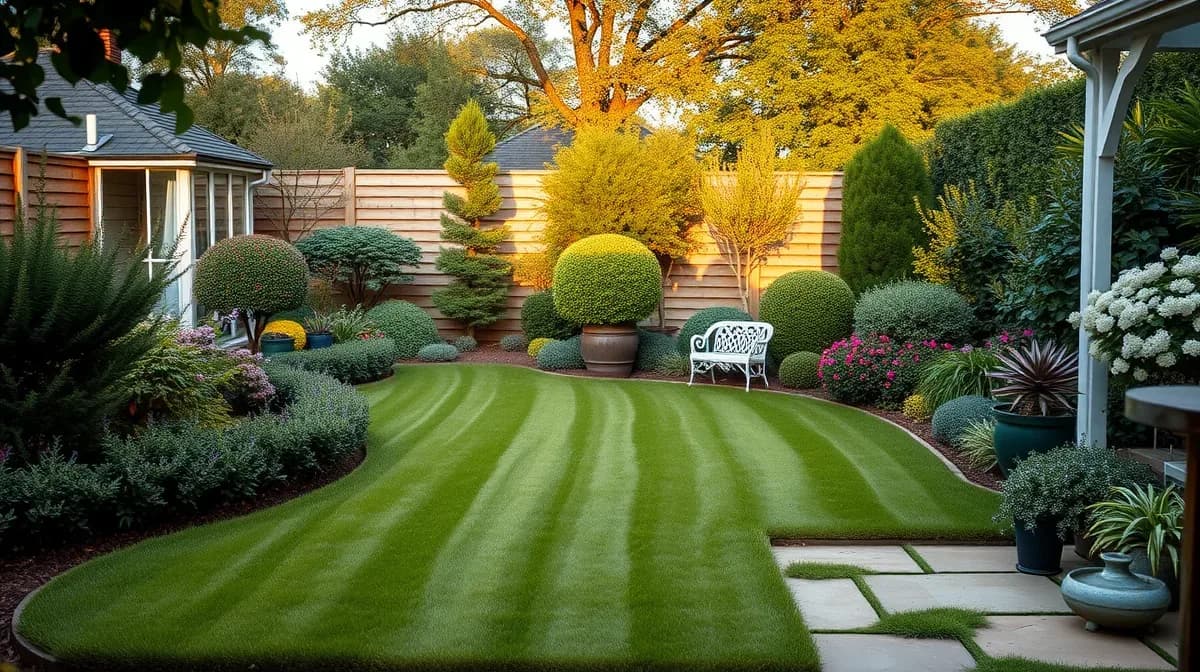
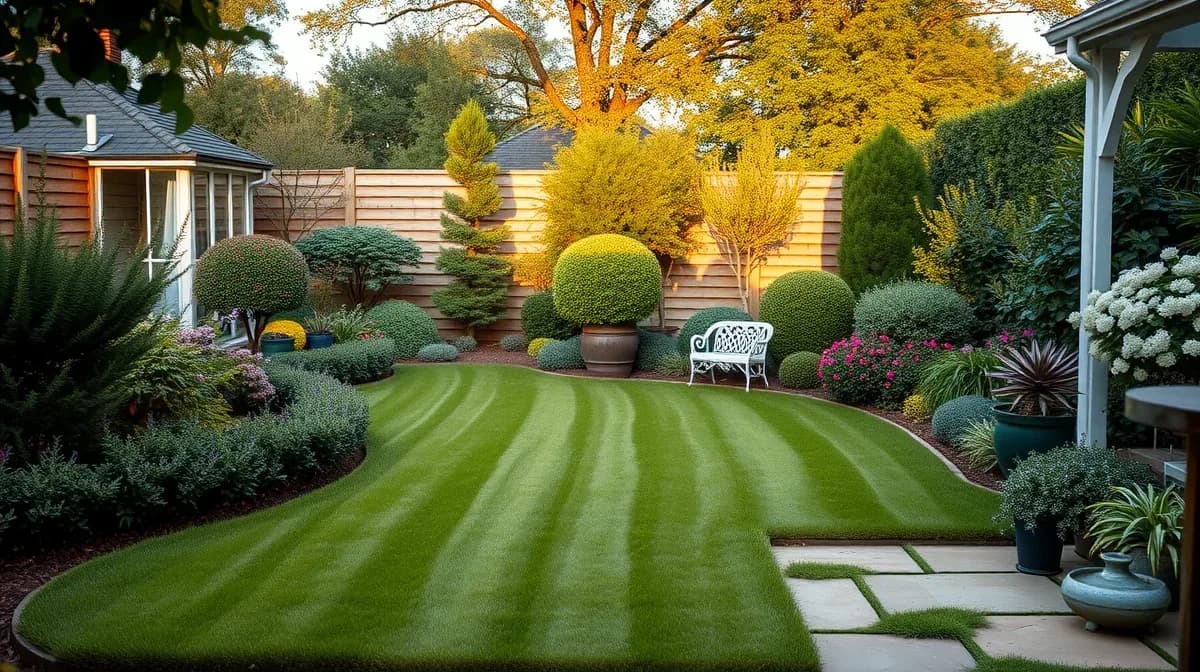
Garden Makeovers
Full redesigns — one team from clearance to planting.
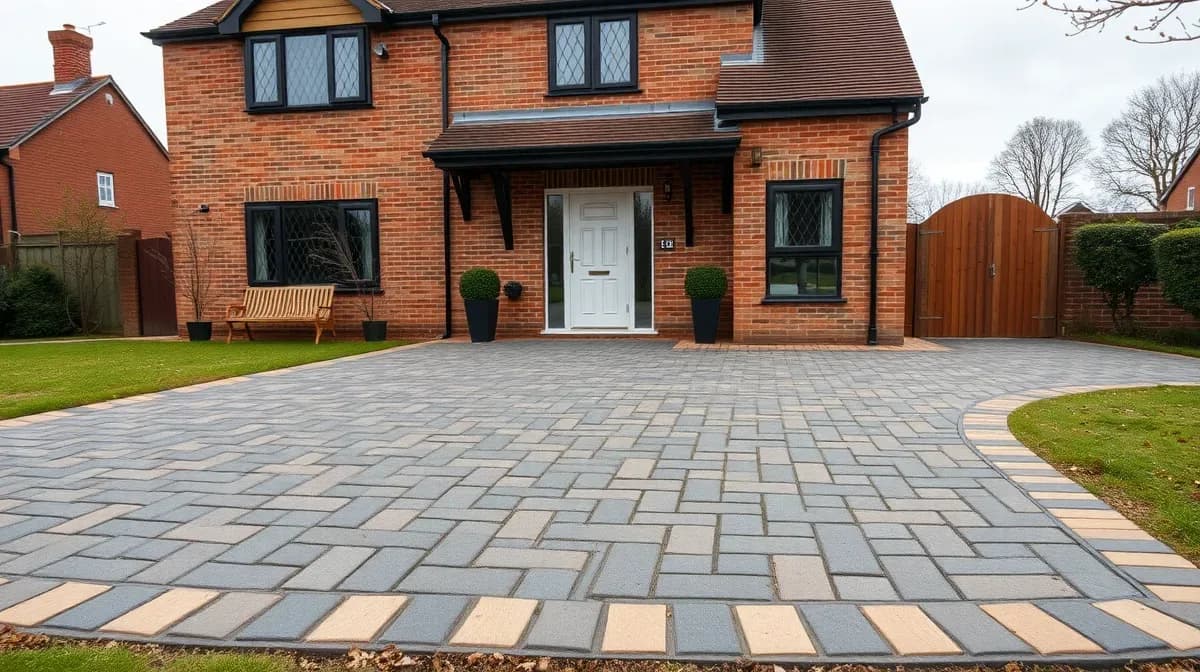
Driveways
Block paved and gravel driveways with real edge detailing and drainage done right.
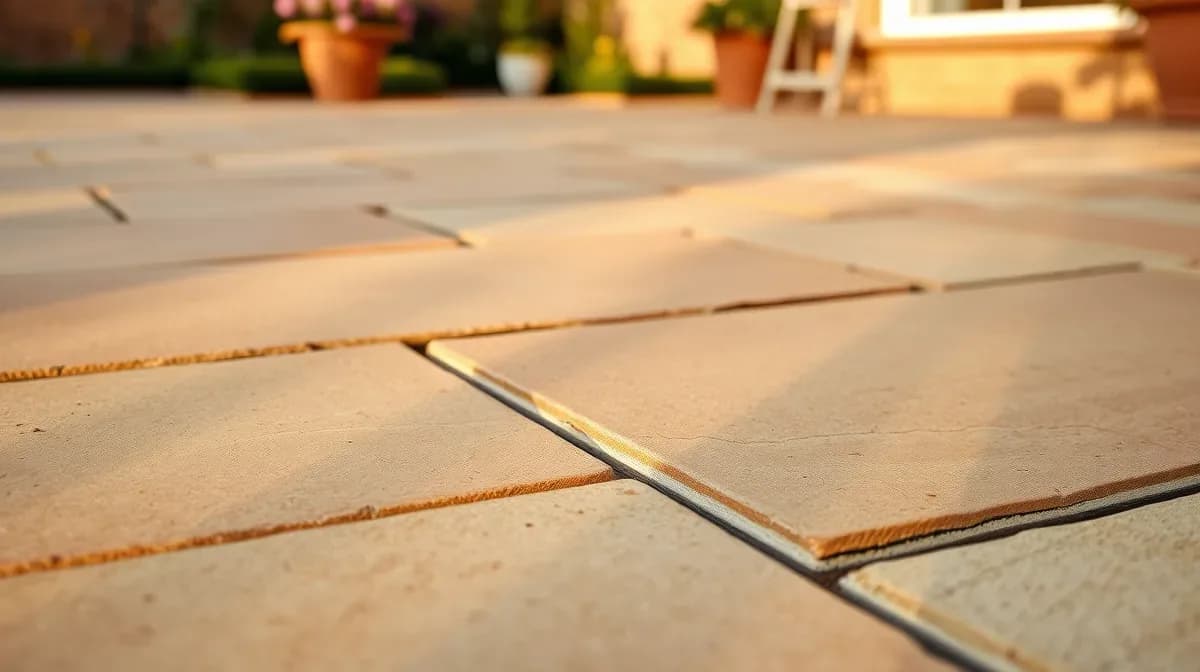
Patios & Paving
Indian sandstone, porcelain and block paving laid on proper sub-bases with clean, tight pointing.
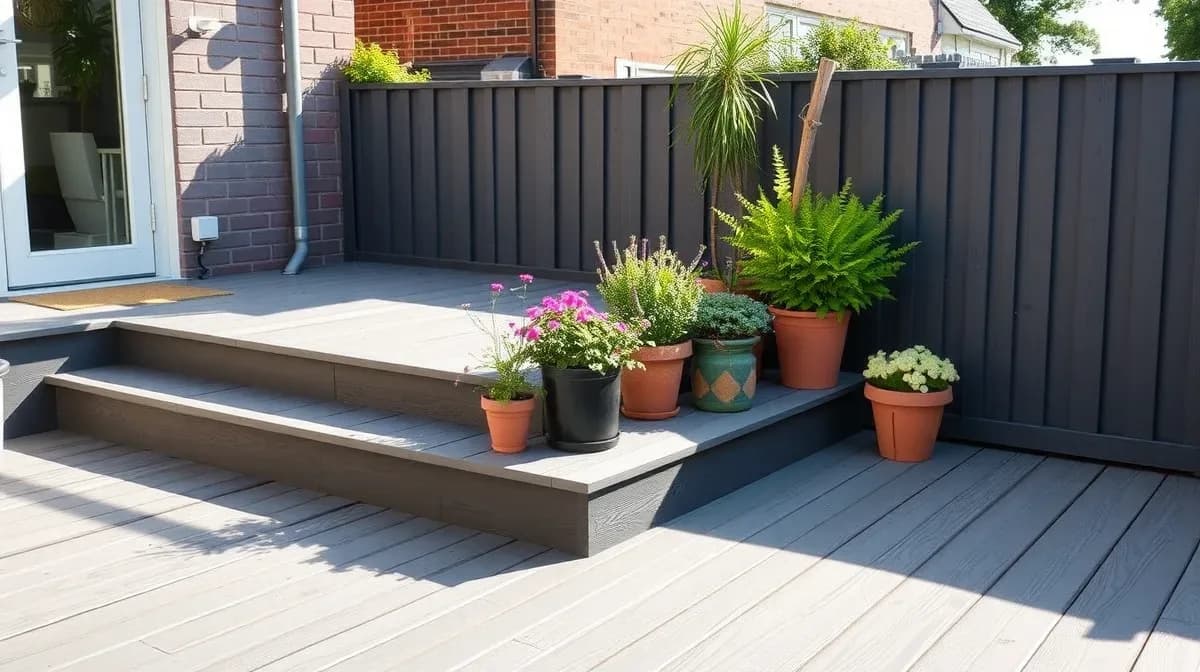
Decking
Timber and composite decking designed for how you'll actually use the garden.
Driveways and hard standing in Basingstoke
Driveways are the biggest single job most Basingstoke households commission, and the one where the difference between a good build and a cheap one is entirely buried.
Block paving driveways
Excavated, edged, laid on a compacted sub-base and vibrated in with kiln-dried sand. Block paving handles vehicle loads well and, when a service needs digging up years later, individual blocks lift and go back rather than being cut out.
Resin bound driveways
Aggregate mixed with resin and trowelled out as a seamless permeable surface. It is quiet underfoot, weed-free and smooth for wheelchairs, prams and bins — and it needs a genuinely sound base beneath it, because it will follow anything that moves.
Gravel driveways
Loose aggregate over a membrane, or held in a plastic grid where the drive slopes or the gravel keeps migrating onto the pavement. The most economical option per square metre and the easiest to extend.
Tarmac and asphalt drives
Straightforward, fast to lay and suited to longer drives and shared accesses. Edges are what fail on tarmac, so the haunching and the kerb detail matter more than the surface does.
Permeable paving and drainage rules
A new drive over five square metres that sheds water straight onto the road needs planning permission. Build it permeable, or drain it to a soakaway inside the property, and it does not — so the drainage design is settled before the layout is.
Sub-bases and excavation depth
Compacted crushed stone in layers, deeper for vehicles than for a footpath. This is the part nobody sees, the part that costs real money, and the only part that decides whether the drive is still flat in a decade.
Dropped kerbs and access
Crossing the footway needs the highway authority's consent and a specified construction. It is a separate approval from anything to do with the drive itself and is worth starting early.
Driveway edgings and kerbs
Every hard surface needs restraint at its edges or it spreads. Concrete kerb, granite setts or a soldier course of blocks, bedded on concrete and haunched behind.
Patios, paving and garden structures
Patios and paving
Porcelain, natural stone, sandstone and concrete paving, laid on a full mortar bed with a fall away from the house so water runs off rather than sitting in puddles. The fall is not optional and is the most common thing missing from a bad patio.
Porcelain paving
Dimensionally consistent, frost-resistant and almost impossible to stain, with tight even joints. It has to be primed on the back before bedding — skip that and slabs start lifting within a couple of seasons.
Natural stone and sandstone
Riven and sawn sandstone, limestone and granite. Natural stone varies from pack to pack, which is part of its appeal, so it gets laid from several packs at once rather than one at a time.
Garden walls and brickwork
Retaining walls, raised beds, planters and boundary walls in brick or block. Anything holding back a significant height of ground needs designing rather than guessing, including proper drainage behind it.
Sleeper walls and raised beds
Timber sleepers for raised beds, terracing and level changes. On a sloping estate garden they are the quickest way to turn an awkward bank into usable flat ground.
Fencing
Closeboard, panel and post-and-rail, on concrete or treated timber posts with gravel boards keeping the timber out of the wet. Concrete posts outlast timber ones by a wide margin and cost very little more.
Timber and composite decking
Timber and composite decks on a properly ventilated substructure. Composite costs more at the outset and then asks nothing of you, which is why most people now choose it for anything they intend to keep.
Steps, levels and terracing
Getting from one level to another safely and comfortably — consistent risers, deep enough treads and drainage that stops the bottom step becoming a puddle.
Lawns, planting and garden maintenance
Turfing and new lawns
Old surface stripped, ground rotavated and levelled, rootzone added where the topsoil is thin, then turf laid to fresh joints. Watering for the first three to four weeks is what decides whether it takes.
Artificial grass
Laid on a compacted stone base with a membrane and sand infill, not rolled onto old lawn. The base is most of the job and the reason cheap installations ripple and hold puddles.
Planting and borders
Planting chosen for chalk and free-draining ground rather than fought against it. Anything ericaceous is a losing battle on this soil unless it goes in a container with its own compost.
Hedging and screening
Hedges for boundaries, privacy and shelter. On new estates a hedge is usually the cheapest long-term screen there is, provided somebody is prepared to wait three years for it.
Topsoil and ground improvement
Estate gardens are frequently left with a thin skim of topsoil over compacted subsoil. Breaking that up and importing decent soil is unglamorous and is why some gardens thrive and neighbouring ones do not.
Garden clearance
Overgrown gardens, end-of-tenancy clearances and probate properties taken back to a blank slate, with everything removed and disposed of properly.
Garden maintenance
Regular grass cutting, hedge trimming, border care and seasonal tidying, on a schedule rather than when it gets desperate.
Full garden makeovers
Design, clearance, groundworks, hard landscaping and planting handled as one job by one team, so nobody is waiting on anybody else and there is one person to ask.
Landscaping costs in Basingstoke — and how long jobs take
Garden work is priced by area and by how much has to come out before anything goes in. These are the ranges we quote most often around Basingstoke. Clearance and waste removal are the two things people most often forget to budget for — both are in the figures below.
| Job | Typical cost | Time on site |
|---|---|---|
| New lawn, 25m² turfed | £600 – £1,100 | 1–2 days |
| Panel fencing, per bay including post | £130 – £200 | — |
| Patio, 15m² Indian sandstone | £2,200 – £3,800 | 4–7 days |
| Gravel driveway, 20m² | £1,800 – £3,500 | 3–5 days |
| Garden refresh — patio, turf and tidy | £6,000 – £12,000 | 2–4 weeks |
Guide ranges for 2026, based on the jobs we price most often. Access, condition and spec move the figure — every job gets a free survey and a fixed price in writing before any work starts.
How we quote and build a garden in Basingstoke
Step 1 — Site visit and trial holes
We measure, and where anything structural is going in we dig a trial hole or two. What sits under the surface sets the excavation depth, the sub-base and the drainage, and those three numbers are most of the cost of a hard landscaping job. Quoting them without looking is guessing.
Step 2 — Materials, drainage and the itemised quote
The drainage strategy is settled before the layout, because a driveway over five square metres that sheds water onto the road needs planning permission and a permeable one does not. The quote then itemises excavation, sub-base depth, edge restraint, the named material and the drainage.
Step 3 — Excavation and disposal
Out comes the old surface and the subsoil to the depth the design needs. Spoil leaves as it is dug rather than living on your drive for a fortnight — on an estate garden with one access point that matters more than it sounds.
Step 4 — Sub-base, drainage and edge restraint
Compacted crushed stone laid and whacked in layers, drainage installed, and the edges restrained in concrete. This is the invisible part, the expensive part, and the only part that decides whether the surface is still flat in ten years.
Step 5 — Laying the surface
Block paving vibrated in and jointed, resin trowelled out, slabs bedded fully on mortar to a proper fall. Falls are not optional: paving that does not shed water holds puddles, grows algae and gets blamed on the material.
Step 6 — Planting, clean-up and aftercare
Turf, planting and finishing, then a genuine clear-up rather than a sweep. You get straight aftercare instructions — new turf lives or dies on watering in its first three to four weeks, and nothing we do at installation changes that.
Who we work for in Basingstoke
New-build garden owners
Developer gardens are handed over as a thin skim of topsoil over compacted subsoil and a fence. Breaking that up and building something usable is one of the most common jobs we are asked for.
Estate homeowners
Front drives, back gardens and everything between, across Chineham, Popley, Brighton Hill, Kempshott and the rest — usually a garden that has not been touched since the house was built.
Landlords and letting agents
Low-maintenance schemes for let property, where the aim is a garden that still looks presentable when nobody has done anything to it for six months.
Developers and builders
External works packages on small sites — drives, paths, levels and boundary treatments, run to somebody else's programme and invoiced accordingly.
Downsizers and later-life moves
Gardens re-planned around less maintenance and easier access: level thresholds, wider paths, raised beds you do not have to kneel at, and lawn replaced where it has become a chore.
Business and commercial premises
Car parks, entrance areas and grounds on trade units and offices around the town's business parks.
Areas we cover
Based in the town, and out most weeks to Oakley, Old Basing, Chineham, Bramley and Tadley. Kingsclere, Overton, Whitchurch, Hook, Odiham, Hartley Wintney and Alton all sit comfortably inside the patch as well. The outlying villages tend to bring larger plots and a good deal more groundwork, so those are priced on what the ground needs rather than on how far we have driven.
Frequently asked questions
Ready for a free, no-obligation quote?
Call 01256 438681